Hand someone a Code,
the context travels.
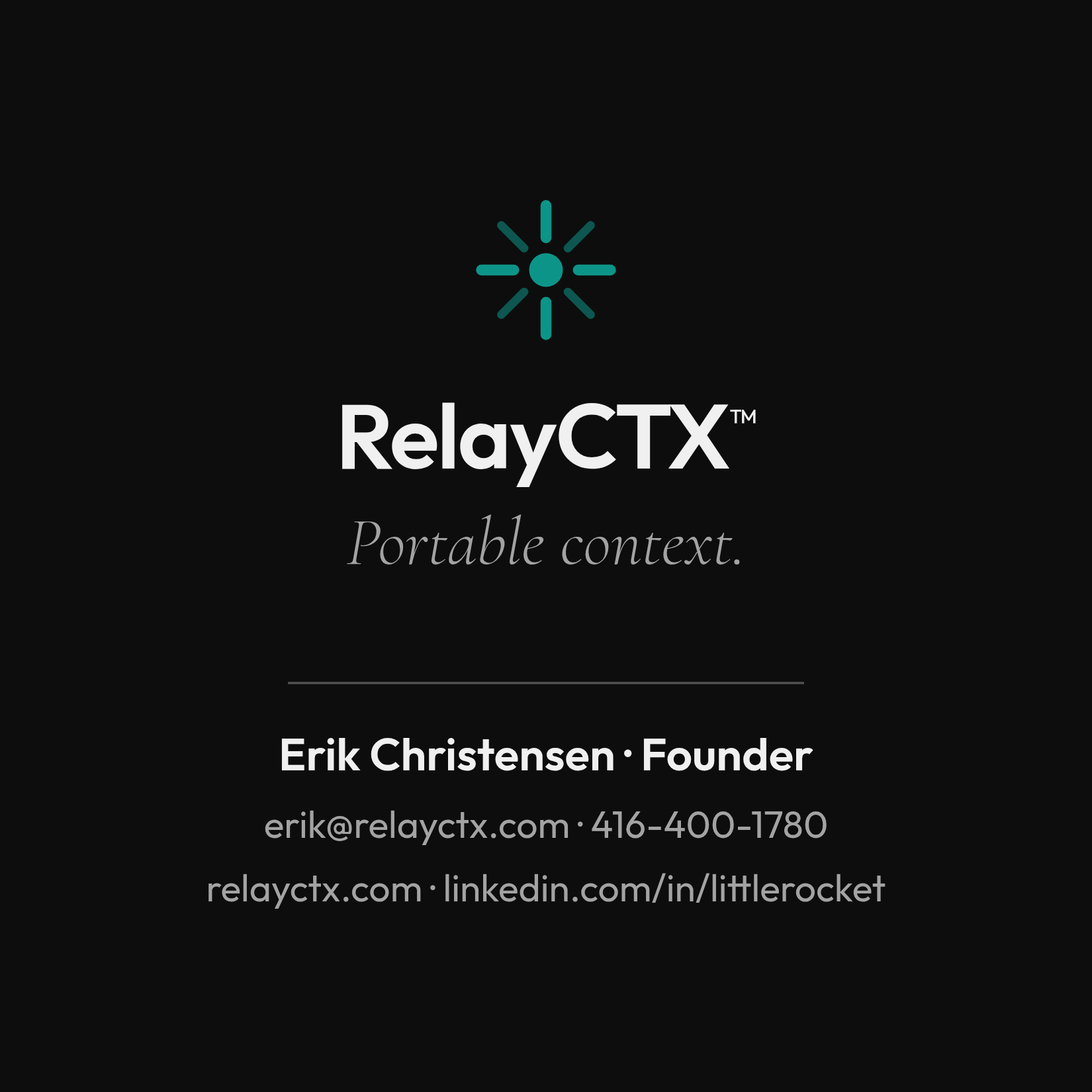
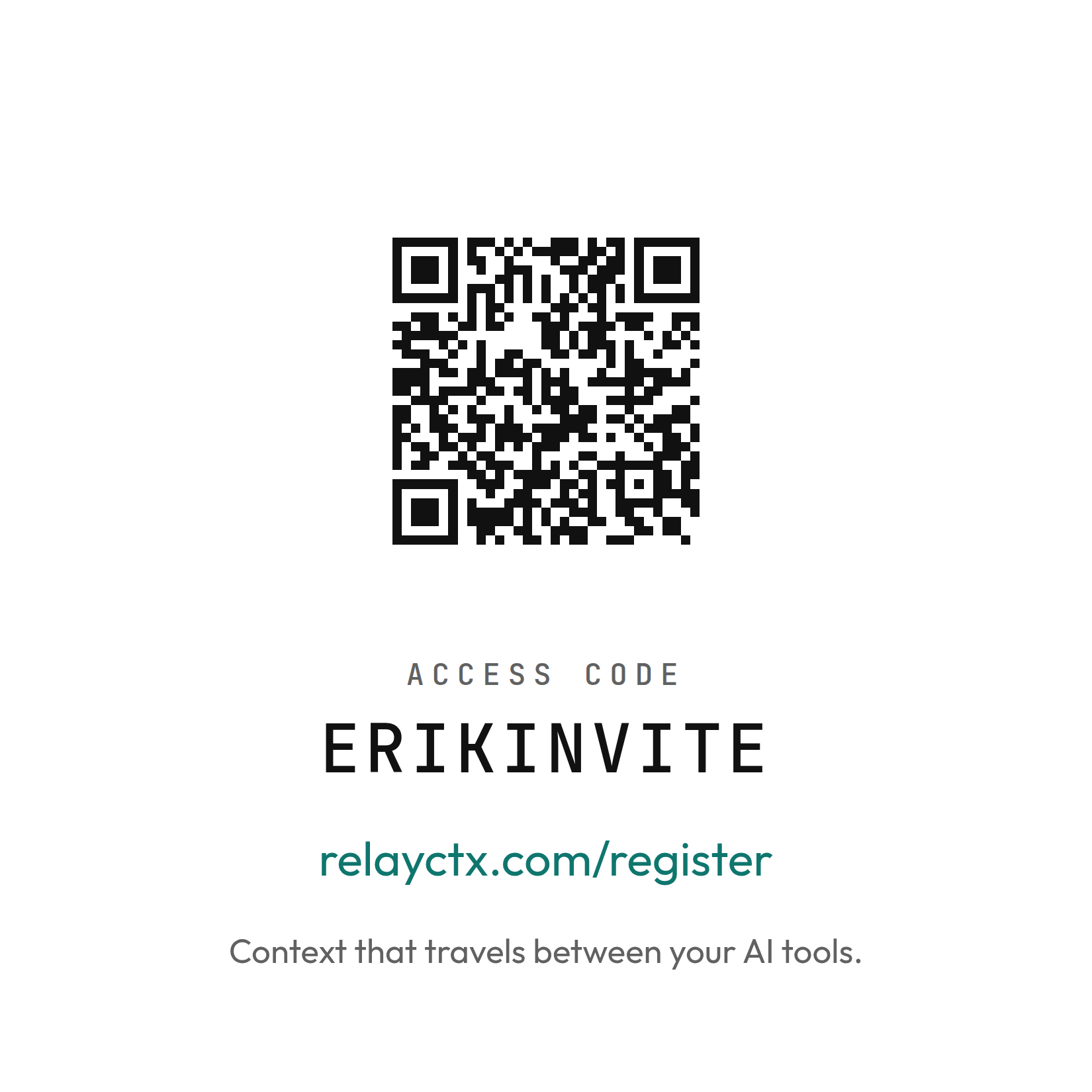
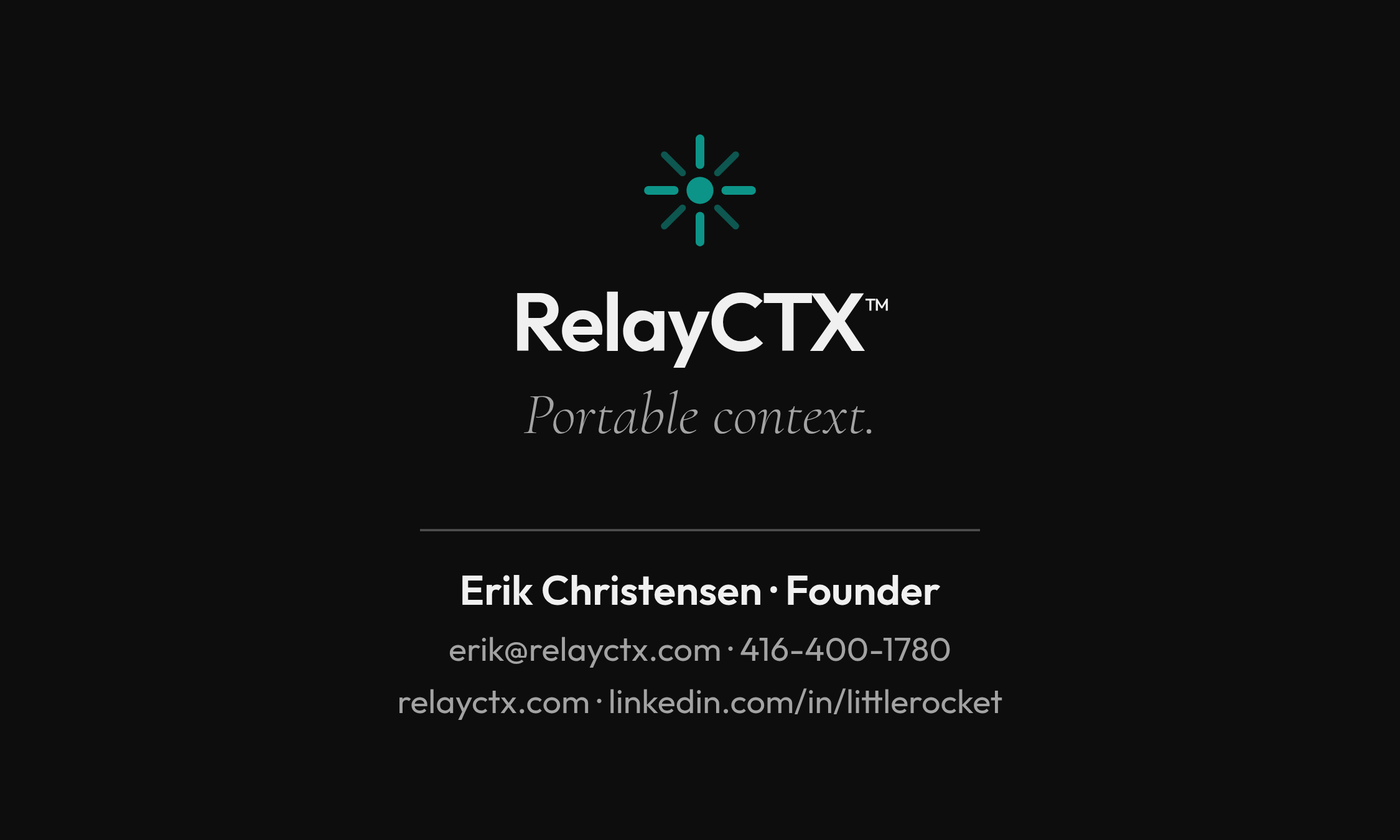
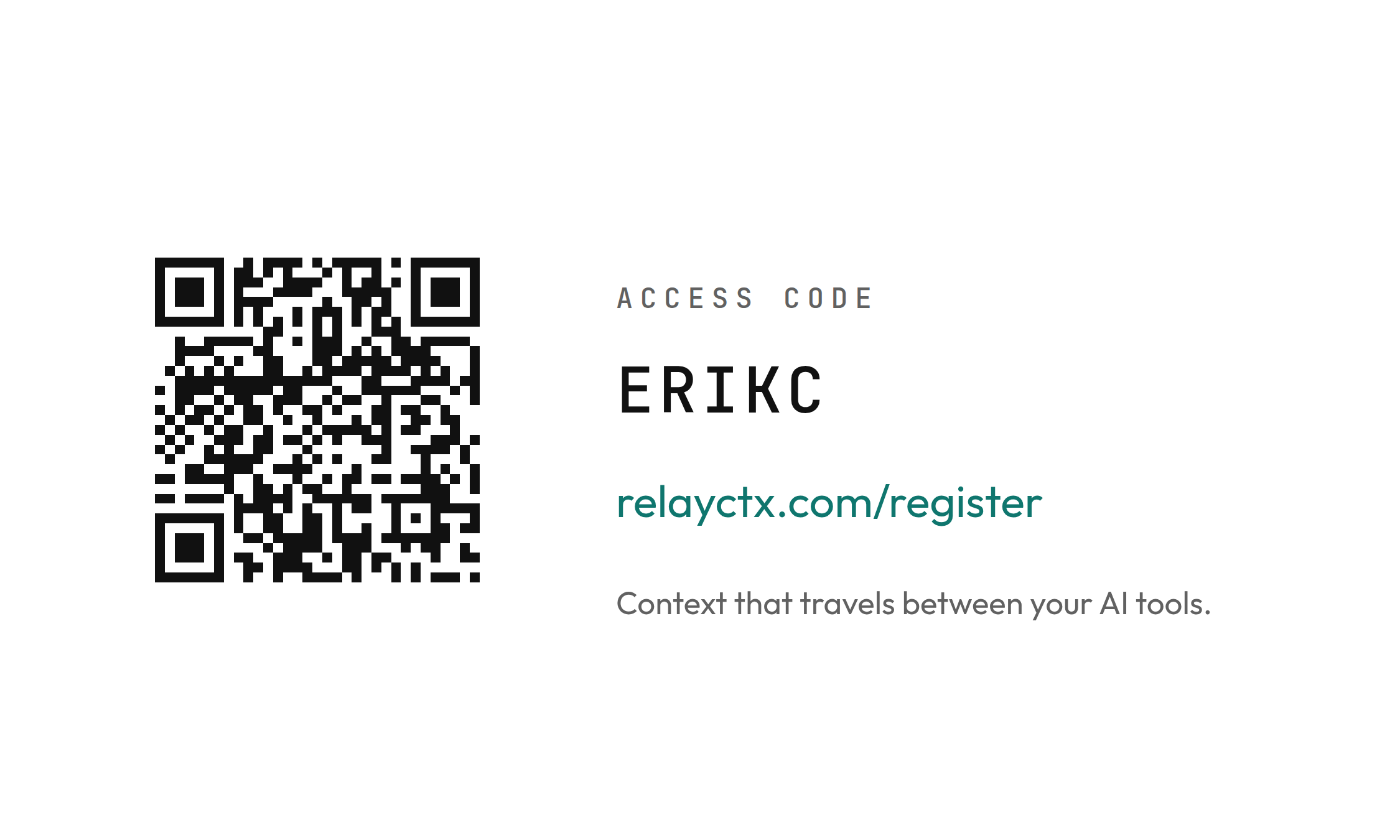
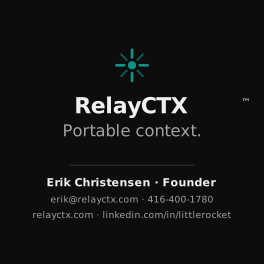
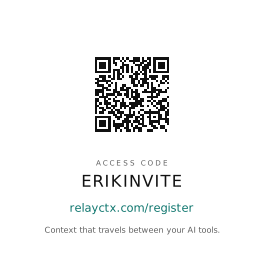
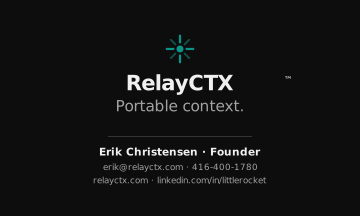
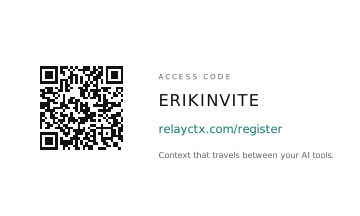
An early-access invite card for print at Jukebox. The card is the product's own gesture in physical form — Relay exists so a Code moves context between sessions and people, and this is that gesture on 20pt stock. Generated from canon by scripts/make_invite_card.py; the QR is real and decodes to a live URL.
01 — The card
02 — What the QR does
| Link | What happens on scan |
|---|---|
relayctx.com/register | Register form, no code. Lands as pending — works today, nothing to mint. |
relayctx.com/register?code=CODE | Code prefilled and validated on arrival; unlocks immediately. The code must exist first. |
relayctx.com/register?code=CODE&ref=erik | Same, plus referral attribution on the registration record. |
The printed card commits the URL permanently. Mint the access code in the admin console before the run, then regenerate — a card whose code was never created is a dead card, and there is no fixing it after 100 of them are in a box.
03 — Regenerating with the real code
python3 scripts/make_invite_card.py --event "SaaS North"     # -> code SAAS-NORTH-2026
python3 scripts/make_invite_card.py --event techweek --year 2027
python3 scripts/make_invite_card.py --code LAUNCH-2026 --ref erik
python3 scripts/make_invite_card.py --event launch --mark white
04 — Print specification
| Item | Value | Note |
|---|---|---|
| Trim size | 2.5 × 2.5" · 3.5 × 2" | Square matches the Jukebox option priced at 100 for $69 |
| File size (with bleed) | 2.75 × 2.75" · 3.75 × 2.25" | 0.125" bleed on all four sides |
| Safe margin | 0.125" inside trim | No type crosses it |
| Resolution | 600 DPI | 1650×1650 px square · 2250×1350 px standard |
| Colour | sRGB | Mark ships at the light-mode accent, which is inside coated CMYK gamut — see §5 |
| Stock / finish | 20pt, matte | Matte suits the dark front — gloss shows fingerprints on a full-bleed dark field |
Geometry follows standard print tolerance. Confirm against Jukebox's own downloadable template before ordering — their spec page was not reachable from the build environment, so these are industry-standard values rather than values read off their site.
05 — Two things that will bite
The card prints the light-mode teal, on purpose. Measured in CIELAB, the light-mode accent is L* 55 / C* 35 — inside coated four-colour gamut, so it prints as designed. The dark-mode accent is L* 77 / C* 46, beyond what process ink reaches at that lightness; it is a screen affordance and comes back duller and greyer on paper. On the dark card the light-mode value still reads 5.19:1 against the ground, well past the 3:1 a graphic mark needs. No new brand green is required — the system already contains a print-safe one.
--mark vivid forces the screen value if you ever want it; --mark white removes the question entirely.The QR must stay dark-on-light. It is on the light side for that reason. Inverted QR codes fail on a meaningful share of scanners. Decoded from the rendered 600 DPI raster at every step, and it still resolves at 150 DPI (square) and 100 DPI (standard) — a phone framing a card delivers far more than that.
PNG is the print file, not the SVG. The SVGs carry live text and need all three brand faces installed. The 600 DPI PNGs have no font dependency and are what goes to Jukebox. Keep the SVG for editing.
The code is printed as text too. Not just encoded in the QR. A camera fails, a lens is dirty, someone is on a laptop — the Code and the URL are both readable without scanning anything.